A data-backed view on what breaks when growth outpaces system design

Executive summary

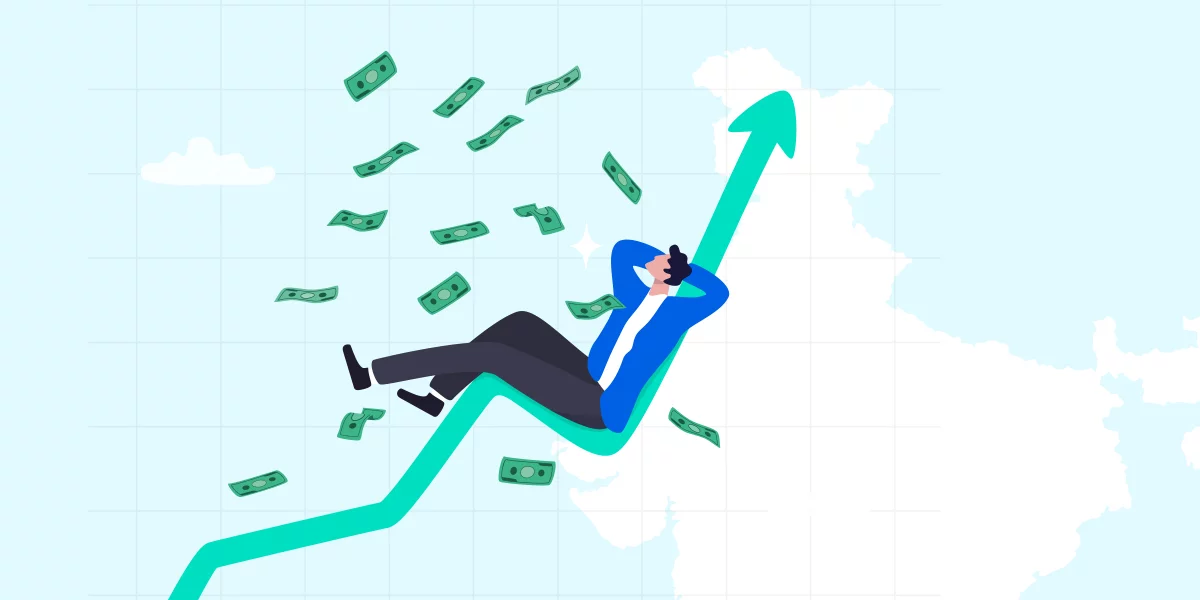
India’s consumer economy has had powerful digital tailwinds: broadband penetration, rising data consumption, and payments infrastructure have made it easier than ever to acquire customers and transact at scale. But these same tailwinds create a trap: topline can scale faster than the operating model can keep up.

The result is a familiar pattern across high-growth consumer businesses:
-
order volumes rise,
-
complexity rises faster,
-
unit economics become harder to control, and
-
leadership becomes reactive rather than strategic.
This is not a “demand problem”. It is a structural scale problem.
1) India’s digital tailwinds are real — and they amplify scale rapidly

Before talking about “what breaks,” it’s worth grounding why early scale can happen so quickly in India:

Connectivity and data usage have reached mass scale

TRAI’s FY 2023–24 report shows India at 954.4 million internet subscribers (end-March 2024), with 924.1 million broadband subscribers. It also reports average wireless data usage of ~19.3 GB per data subscriber per month, and wireless data traffic growth of ~21.7% YoY (FY23–24).

Translation: distribution has gone digital, and user engagement capacity is high.

Digital payments have removed friction from conversion

NPCI’s published UPI statistics show that in December 2025, UPI processed ~21,634.67 million transactions (≈21.6 billion) with value ~₹27,96,712.73 crore.

Translation: consumer conversion is no longer constrained by cash handling or card rails.

Open commerce rails are scaling too

Government (PIB) reporting notes ONDC had processed 326 million+ cumulative orders as of Oct 2025, with 18.2 million orders in Oct 2025 and average daily transactions of ~5.9 lakh.

Translation: multiple demand channels are emerging, not just a few closed platforms.

Why this matters: When demand + payments + distribution rails scale together, companies can grow fast—even if their internal systems are not ready. And that’s exactly where pain begins.
2) The structural breakpoint: when growth stops being “just more of the same”

Most consumer businesses experience a phase change where complexity compounds. At that point, the cost of “not having a system” becomes visible.

A simple way to frame it:
Early scale rewards speed. Later scale punishes improvisation.
Public company disclosures reflect just how large the operating surface area becomes. For instance, Zomato’s FY22–23 annual report notes 647.0 million orders delivered and 58 million annual transacting customers in FY23.
That magnitude isn’t a flex; it’s a warning label: beyond a point, variance becomes your biggest enemy—variance in service levels, costs, productivity, and decision-making.
3) What typically breaks (and why) — with a “systems” lens

A) Cost-to-serve becomes opaque

At early scale, companies track broad unit economics (CAC, gross margin, contribution). But beyond early scale, the real profit story sits in cost-to-serve by segment / geography / channel.

What causes margin surprises:
-
certain geographies or cohorts needing higher service intensity
-
delivery promises or SLA creep becoming “default”
-
assortment complexity inflating picking/packing/returns
-
promo mechanics creating hidden subsidy layers
When cost-to-serve isn’t measured at the right grain, businesses keep scaling unprofitable micro-markets while the average still looks okay—until it doesn’t.
B) Operating model mismatch (speed-built processes don’t scale)

TRAI’s data shows the market is already operating at high digital intensity (19.3 GB/user/month average).
That intensity pushes companies to expand:
-
more campaigns
-
more SKUs
-
more order volumes
-
more service variations
-
more exceptions
If internal processes rely on “heroic execution” (manual workarounds, tribal knowledge), scale introduces:
-
higher rework and error rates
-
inconsistent customer experience
-
hidden labour creep
-
brittle operations during spikes
C) Governance fails quietly, then suddenly

When UPI can process 21+ billion transactions a month nationally, your business can shift materially in weeks.
Founder-led governance often becomes a bottleneck because:
-
decision volume explodes
-
interdependencies multiply
-
teams optimize locally
-
accountability becomes fuzzy
The symptoms are predictable:
-
escalation culture
-
“approval traffic jams”
-
late course-corrections
-
performance reviews that are narrative-driven, not data-driven
D) Organization design lags growth

As revenue scales, organizations frequently add people faster than they design roles. The result is org debt:
-
unclear ownership across functions
-
duplicate work and shadow teams
-
capability gaps at middle management
-
spans/layers that evolve accidentally (not intentionally)
At later scale, execution quality depends less on individual talent and more on repeatable operating discipline.
4) What winners do differently (practical, not theoretical)

Businesses that navigate the early-to-late scale shift usually do four things earlier than others:
-
Instrument the business at the right grain
Not just “overall contribution margin,” but segment-level cost-to-serve and cohort economics. -
Redesign the operating model before it breaks
Standardize core workflows; automate exception handling; reduce handoffs. -
Upgrade governance (without slowing down)
Clear decision rights + operating cadence + metric ownership (no “everyone owns it”). -
Treat org design as an enabler of profitability
Roles, spans, incentives, and capability building tied to the operating model—not to headcount plans.
Closing perspective

India’s digital infrastructure makes growth easier—but it also makes complexity arrive faster.
If companies don’t deliberately evolve from “speed execution” to “system execution,” they will feel like they’re scaling—but the business will be quietly leaking margin, time, and leadership bandwidth.

In short: Growth doesn’t fail. The operating model fails to keep up.